1. UNIFIED SCHOOL DISTRICT No. 261
    2. Nutritional Quality of Foods and Beverages Sold and Served at School
    3. Breakfast
    4. Free and Reduced Priced Meals
    5. Meal Times and Scheduling USD #261
    6. Sharing of Foods and Beverages
    7. Snacks
    8. What about birthday cake?
    9. Alternatives to Using Food as a Reward
    10. Fundraisers

11/2/2006
Page 1 of 7
UNIFIED SCHOOL
DISTRICT
No. 261
Haysville
School Wellness
Guidelines
June, 2006

11/2/2006
Page 2 of 7
With the intention of setting forth guidelines to help make significant progress in improving the wellness of our students, the
Unified School District No. 261 School Wellness Committee has created recommendations based on the Kansas State
Department of Education’s Wellness Policy Guidelines.
When developing these guidelines, particular attention has been given to providing healthful foods and beverages with the
goal of preventing and reducing childhood obesity. Many of the committee recommendations contained in these guidelines
represent “new goals” or goals “in progress” for schools. District and building-level implementation plans, which include
strategies for monitoring the on-going progress of each goal, have been or are currently underway to ensure compliance
with KSDE guidelines.
Unified School District No. 261 School Wellness Committee is comprised of the following members:
Lisa Cundiff
USD 261 Director of Instructional Technology
Richard Elliott
Campus HS Assistant Athletic Director
Penny Hobkirk
Director of USD 261 Staff Development Center and Grant Writing
Gina Lee
USD 261 Food Service Director
Mike Maurer
Haysville Middle School Principal
Perry McCabe
USD 261 Assistant Superintendent of Business and Finance
Steve Miller
Ruth Clark Elementary Physical Education Teacher
Tammy Palmer
USD 261 District Nurse
Tonya Roberts
Haysville Middle School Physical Education Teacher
Debie Pile
Wesley Medical Center Administrator
Myron Regier
Campus High School Principal
Barb Walters
USD 261 Board of Education Member
Tonya Roberts
Haysville Middle School Physical Education Teacher
Sub-committees, which include various additional constituency representatives, have also been formed to provide input
related to specific nutrition, nutrition education, and physical activity needs and issues.

 
11/2/2006
Page 3 of 7
~USD 261 School Wellness Guidelines~
UNIFIED SCHOOL DISTRICT No. 261
School Wellness Policies and Plan
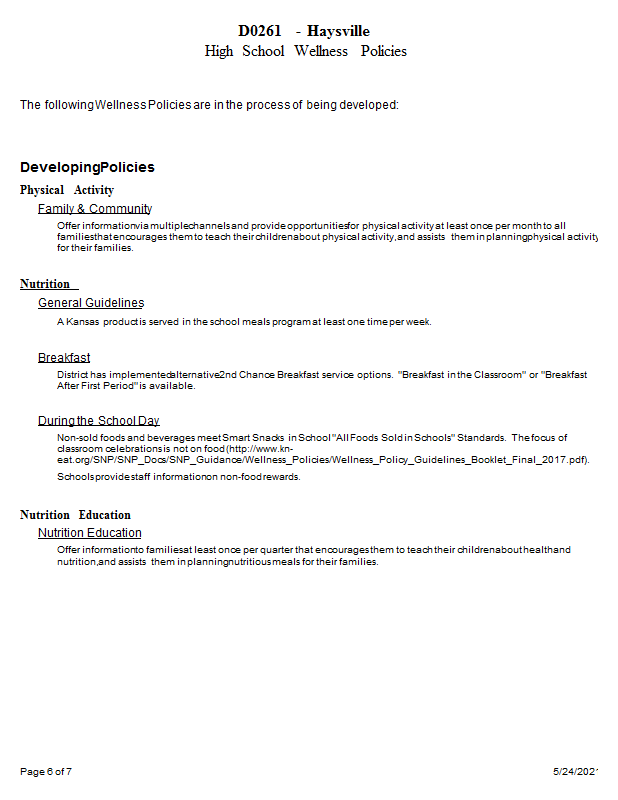
UNIFIED SCHOOL DISTRICT No. 261’s Wellness Policies on Physical Activity and Nutrition.
PREAMBLE
Whereas,
children need access to healthful foods and opportunities to be physically active in order to grow, learn, and thrive;
Whereas,
good health fosters student attendance and education;
Whereas,
obesity rates have doubled in children and tripled in adolescents over the last two decades, and physical inactivity and
excessive calorie intake are the predominant causes of obesity;
Whereas,
heart disease, cancer, stroke, and diabetes are responsible for two-thirds of deaths in the United States, and major risk
factors for those diseases, including unhealthy eating habits, physical inactivity, and obesity, often are established in childhood;
Whereas,
33% of high school students do not participate in sufficient vigorous activity and 72% of high school students do not attend
daily physical education classes;
Whereas,
only 2% of children (2 to 19 years) eat a healthy diet consistent with the five main recommendations from the Food Guide
Pyramid;
Whereas,
nationally, the items most commonly sold from school vending machines, school stores, and snack bars include low-nutrition
foods and beverages, such as soda, sports drinks, imitation fruit juices, chips, candy, cookies, and snack cakes;
Whereas,
school districts around the country are facing significant fiscal and scheduling constraints; and
Whereas,
community participation is essential to the development and implementation of successful school wellness policies;
Thus, USD 261, Haysville is committed to providing
school environments that promote and protect children’s health, well-being and
ability to learn by supporting healthy eating and physical activity. Therefore it is the policy of the Haysville School District that:
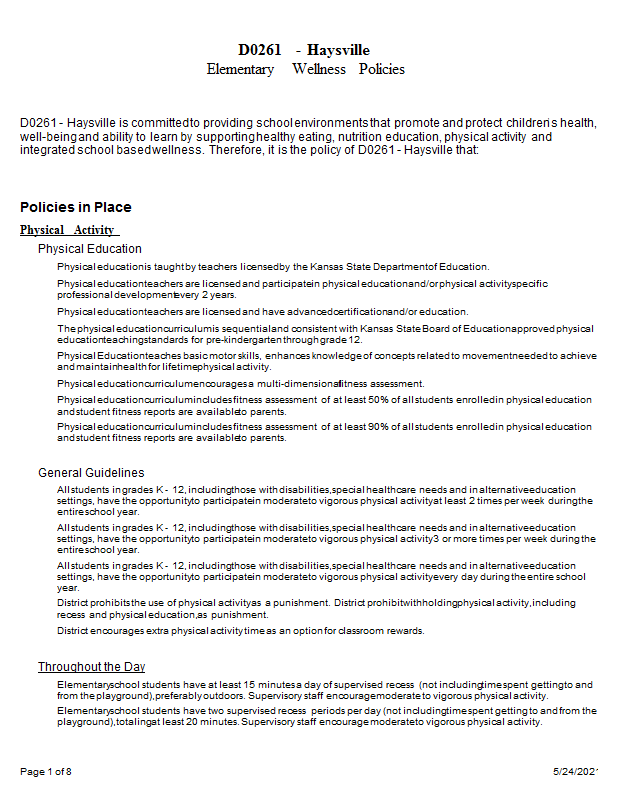
USD 261 is committed to providing school environments that promote and protect children's health, well-being and ability to learn by
supporting healthy eating and physical activity. Therefore, it is the policy of the Haysville School District that:
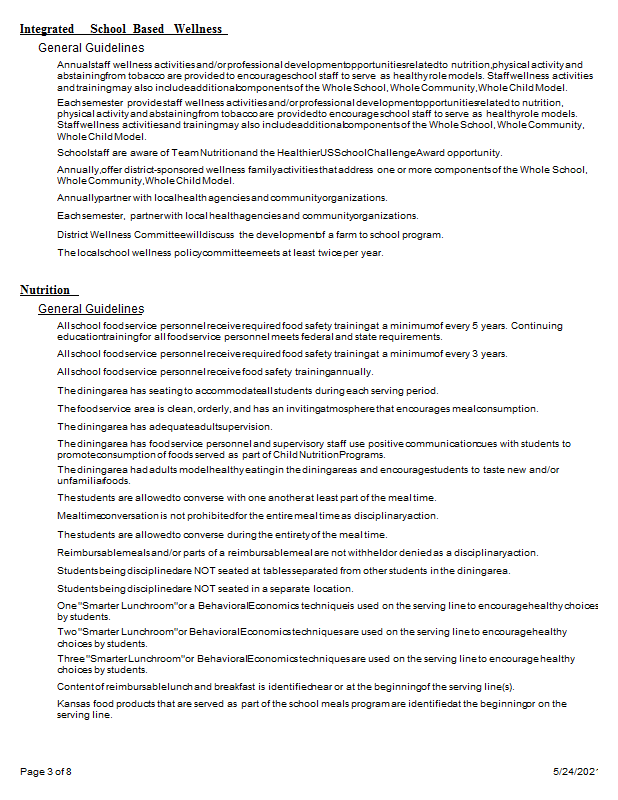
Wellness guidelines will be implemented as specified in the Kansas State Department of Education’s Wellness Policy Report for
each school level.
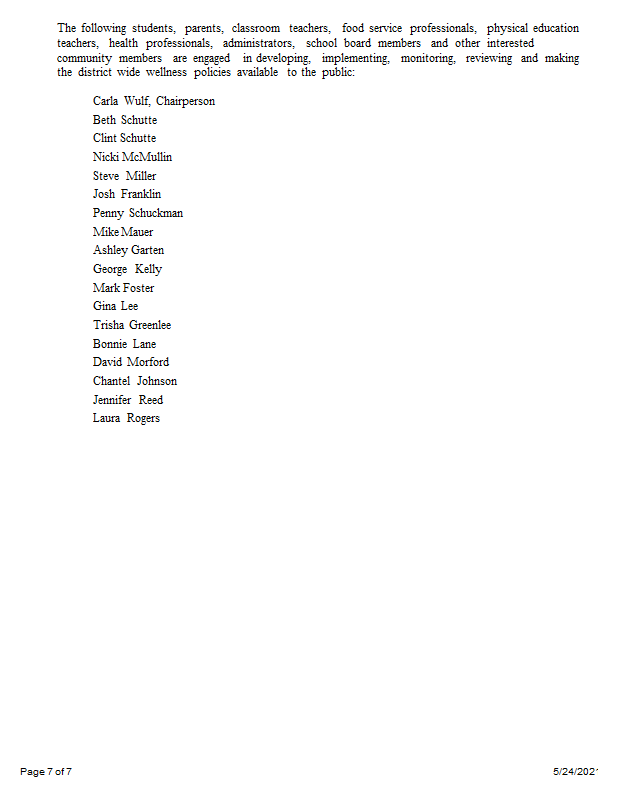
Students, parents, teachers, food service professionals, health professionals and other interested community members will be
engaged in developing, implementing, monitoring and reviewing district-wide nutrition and physical activity policies.
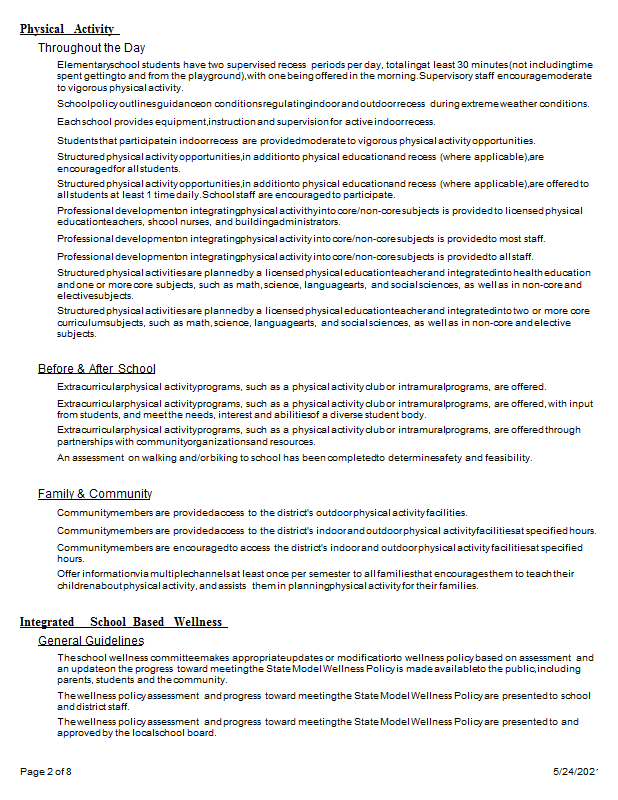
All students in grades K-12 will have opportunities, support and encouragement to be physically active on a regular basis.
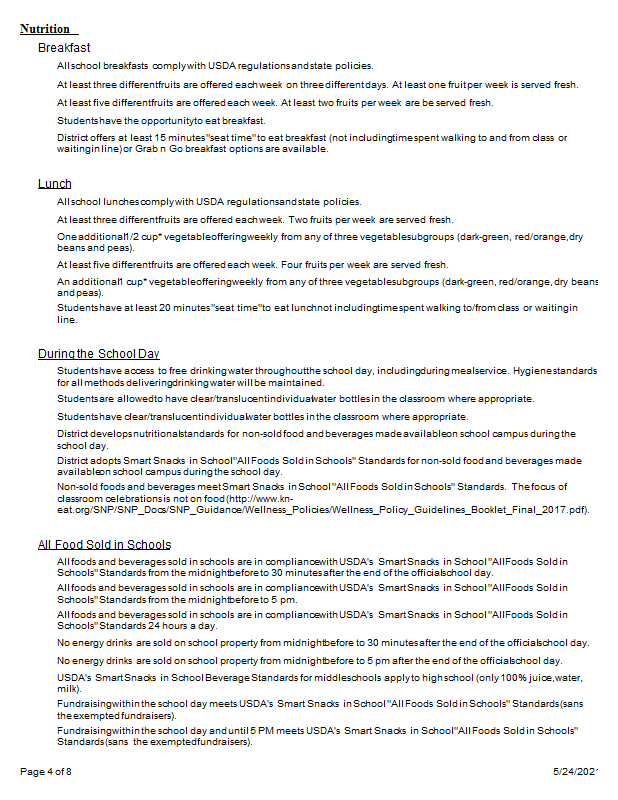
Foods and beverages sold or served at school will meet the nutrition recommendations of the
U.S. Dietary Guidelines for
Americans
.
Qualified child nutrition professionals will provide students with access to a variety of affordable, nutritious, and appealing foods
that meet the health and nutrition needs of students.
Students will be provided with adequate time to eat in settings that are clean, safe, and pleasant.
To the maximum extent practicable, all schools in our district will participate in available federal school nutrition programs.
Schools will provide nutrition education and physical education to foster lifelong habits of healthy eating and physical activity, and
will establish linkages between health education, school nutrition programs and related community services.

 
11/2/2006
Page 4 of 7
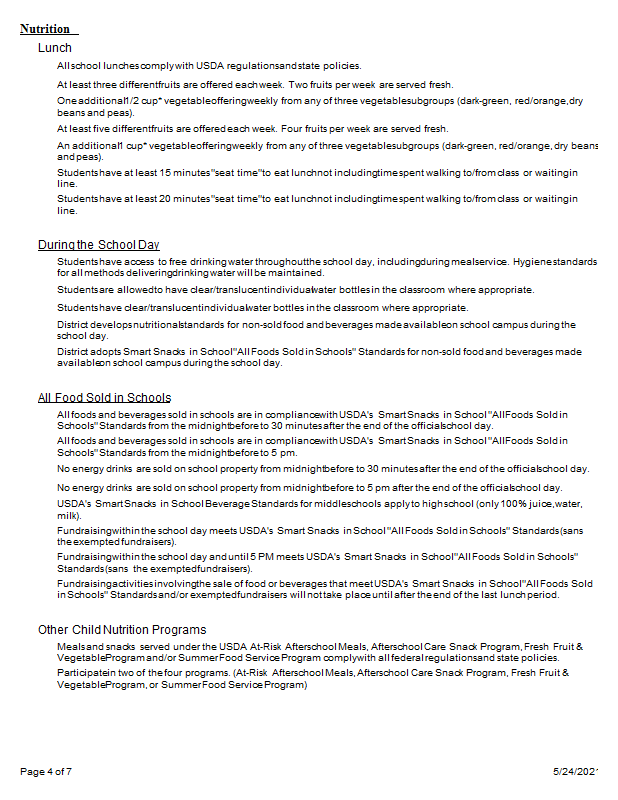
utritional Quality of Foods and Beve
g
established by local, state and federal statutes and regulations
N
rages Sold and Served at School
Meals
served through the National School Lunch and Breakfast Programs will:
Be appealing and attractive to children
Be served in a clean and pleasant settin
Meet, at a minimum, nutrition requirements
grains are whole grain
ibility of the food services director. From time to time, the food service
hat all students have an opportunity to eat a breakfast that meets their nutritional needs and enhances their ability to learn:
ree
take part in the free and reduced priced meal program. Every effort will be made by the district to
inutes to eat breakfast not including time spent walking to and from class or waiting in line
eetings during mealtimes, unless students may eat during such activities
ha ng
from sharing their food or beverages with one another during meal or snack times, given concerns
esponsibility of ensuring building compliance with student wellness policies and guidelines. To ensure
ybe served or sold to students before or during the school day through vending and a la carte.
uice and do not
Offer a variety of fruits and vegetables
Serve only low-fat 1 % milk
Ensure that half of the served
The
implementation of these guidelines shall be the sole respons
director will offer opportunities for students, parents, and staff, a taste test of new entrees and surveys, in selecting foods offered
through the school hot lunch and breakfast programs in order to identify new, healthful, and appealing food choices. The nutritional
value of the meals served shall be made available upon request from the food service director who shall keep a written record of the
nutritional value of all food served.
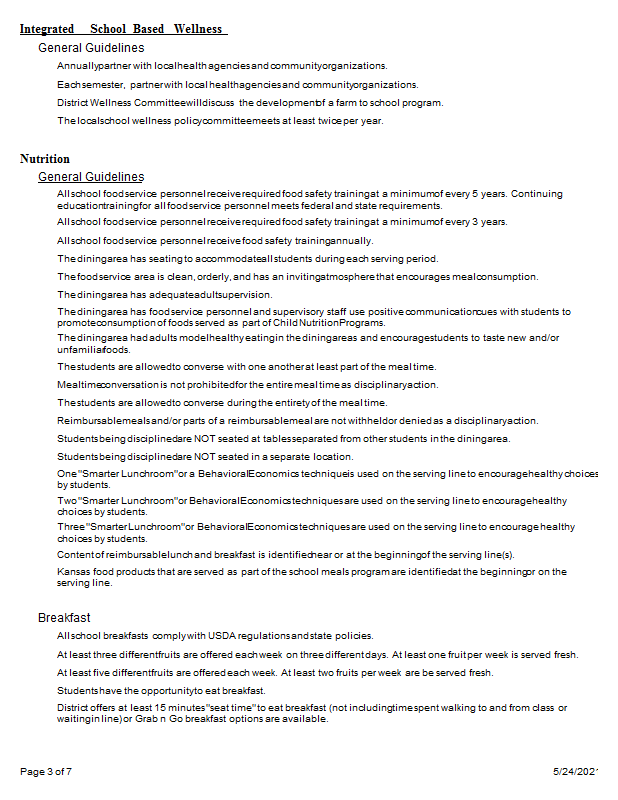
Breakfast
To ensure t
USD #261 will operate the School Breakfast Program in conjunction with the bus schedules in order to give every student the
opportunity to take part in the program
F
and Reduced Priced Meals
USD #261 will encourage families to
maintain the confidentiality of those who are eligible for free and reduced price school meals.
Meal
Times and Scheduling
USD #261
Will provide students at least 10 m
Will have at least 15 minutes to eat lunch not including time spent walking to and from class or waiting in line
Should schedule meal periods at appropriate times
Should not schedule activities, organizational/class m
Should take reasonable steps to accommodate students who have special food needs due to food allergies or special diet and
other special needs
Will provide access to and encourage students to wash or sanitize hands before they eat meals or snacks
S ri
of Foods and Beverages
USD #261 shall discourage students
about allergies, disease transmission and other restrictions on a child.
Monitoring Requirements
Building principals have the r
compliance, principals shall review policies and guidelines with staff at the beginning of each school year. Throughout the year,
principals shall routinely monitor for compliance, providing assistance to staff members as needed. Parents, teachers, and
organizations will be informed about the guidelines and encouraged to follow them.
Nutrition
Guidelines
The following foods ma
Beverages Allowed:
Water without caloric sweeteners; fruit and vegetable juices that contain at least 50% fruit j
contain additional caloric sweeteners; milk that has 360 calories or less.
Beverages Not Allowed:
soft drinks containing caloric sweeteners; iced teas; fruit based drinks that contain less than 50% real
fruit juice or that contain additional caloric sweeteners; beverages containing caffeine, excluding low fat 2 % or 1% fat free
chocolate milk (which contains trivial amounts of caffeine)
Food Items Sold individually and A la Carte:
50% of food items offered individually meet these guidelines
o
Fat – Except for nuts, seeds, and nut butters, 35% or less of total calories from fat

 
11/2/2006
Page 5 of 7
addition, Fo
ervices may offer a la carte items as follows:
n size of any food item served that day in the school breakfast or lunch program. In
served that day in the school breakfast or lunch program. In
ending
ntary Schools –
no beverage/snack vending machines may be in operation where students may purchase items during the
ls –
where vending or school stores are available to students, items that meet the Nutrition Guidelines may be sold.
hools –
where vending or school stores are available to students, at least 50% of the items available in any single location
t
nacks
re important for providing children with nutrients to support growth and learning. Parties are an opportunity to celebrate. With
y
0% fruit snacks
Vegetable tray with low fat dip
Angel food cake with fruit toppings
o
Sugar – Except for fruit without added sugar, 35% or less of weight from total sugar
o
Calories – 200 calories or less per selling unit
In
od S
Elementary Schools
may offer milk only
Middle Schools
may offer the same portio
addition, items that meet the Nutrition Guidelines may be sold.
High Schools
may offer the same portion size of any food item
addition, items that meet the Nutrition Guidelines may be sold.
V
Eleme
school day.
Middle Schoo
Food and beverage sales to students before and during the school day shall be prepared and served following all applicable health
codes and USDA regulations. USD 261 will not permit food and/or beverages to be served or (vending) during the food service
period.
High Sc
within a building where food/snacks are sold must meet the Nutrition Guidelines. Food and beverage sales to student before and
during the schools day shall be prepared and served following all applicable health codes and USDA regulations. USD 261 will no
permit food and/or beverages to be served (vending) during the food service period. For sports drinks, only 12 oz drinks will be
offered in drink machines located near high school athletic training centers.
S
Snacks a
a little imagination, snacks and parties can be fun and still provide healthy, nutrient rich foods. Snacks served during the school day,
used as reward/reinforcement incentives or school enrichment programs (including summer school) shall make a positive contribution
to the child’s diet and health. Emphasis will be on healthy snacks and drinks, and must be considered in relationship to the time of
breakfast and lunch for the student. Food allergies and special dietary needs, including diabetes, are becoming increasingly common
in the general population and should be considered when planning food at school. Food and beverages for classroom rewards,
parties, and celebrations should not be provided until at least one hour after the lunch hour. The following are examples of health
snack or party ideas:
10
Fruit Smoothies
Fruit with whipped topping
Fruit and cheese kabobs
Sliced fruit
Apples with caramel dip
Fresh fruit with yogurt dipping sauce
Fruit wedges
Fruit Salad or fruit added to gelatin
Pizza with low fat toppings
Salami, cheese, and whole grain crackers
Nut assortments or trail mix
Low fat beef jerky
Low fat pudding cups
Low fat milk plain or flavored
Cheese quesadillas
String cheese
Yogurts in a cup or in a tube
Pasta Salad
Animal crackers
Low fat pretzels or popcorn
Bread sticks with marinara
Granola bars, graham crackers
Banana, carrot, or zucchini bread
Bagels and cream cheese
Berry parfaits with vanilla yogurt
Salsa and low fat chips
Trail mix or cereal mixes
What about birthday cake?
day cake can fit into a healthy diet. However, if each student brings in cake for his or her birthday, eating
lternatives to Using Food as a Reward
ommunity often offer kids food as a reward for good behavior. Typically food rewards have
Once in awhile a piece of birth
cake becomes a regular occurrence. One suggestion to make cake a “sometimes” food is having a monthly birthday party to celebrate
all students’ birthdays for that month with one celebration. Work to limit parties with cake and other sugary or high fat foods to once a
month or less, and to provide alternative foods for children with special dietary needs, including allergies and diabetes.
A
Teachers, administration, parents, and the c
little or no nutritional value, but are used because they are easy, inexpensive treats that are thought to bring about short-term behavior
change. Teachers and staff are encouraged to reward students with non food items. Using food as a reward send a mixed message
that highlights the conflict between the nutrition education taught in the classroom and the school environment. It encourages over-
consumption of foods high in added sugar and fat that can lead to being overweight, and may displace more nutritious foods. Food as

 
11/2/2006
Page 6 of 7
Sit at the teacher’s desk
the teacher/principal
me
k
staff member performs a special skill (i.e. singing, jumping rope at recess) or reads a book to the class
undraisers
us foods and beverages as fundraisers help create a healthy school environment. Schools can help promote a healthy
fj/publications/CreativeFinancing.pdf
a reward teaches kids to reward themselves with food, even when they are not hungry. Some cost-free alternative rewards might
include:
Sit by friends
Eat lunch with
Classroom helper privileges
Read outside
Extra recess ti
Class walking brea
Free choice time
Teacher, guest, or
Other rewards deemed to be age/grade level appropriate
F
Sale of nutritio
learning environment by using non-food items as fundraising alternatives. At least 50% of fundraising activities will not involve the sale
of food or beverages. The following web sites offer healthy fundraising alternatives:
California Department of Health Services:
http://departments.oxy.edu/uepi/c
Richland County School District One:
http://www.richlandone.org/departments/student_nutrition/fundraising_ideas
.htm
Oklahoma State Department of Education:
http://cnp.sde.state.ok.us/documents/FundraisingIdeas.pdf
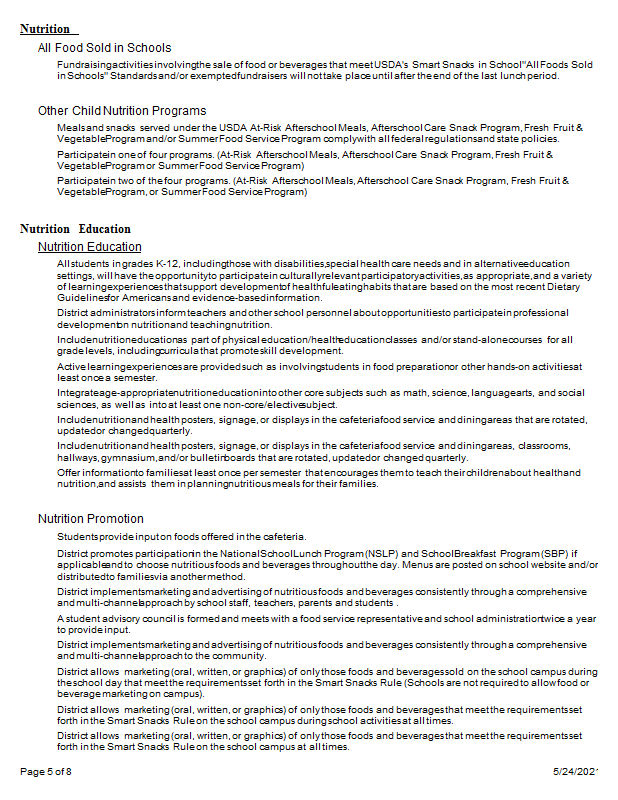
utrition Education and Promotion
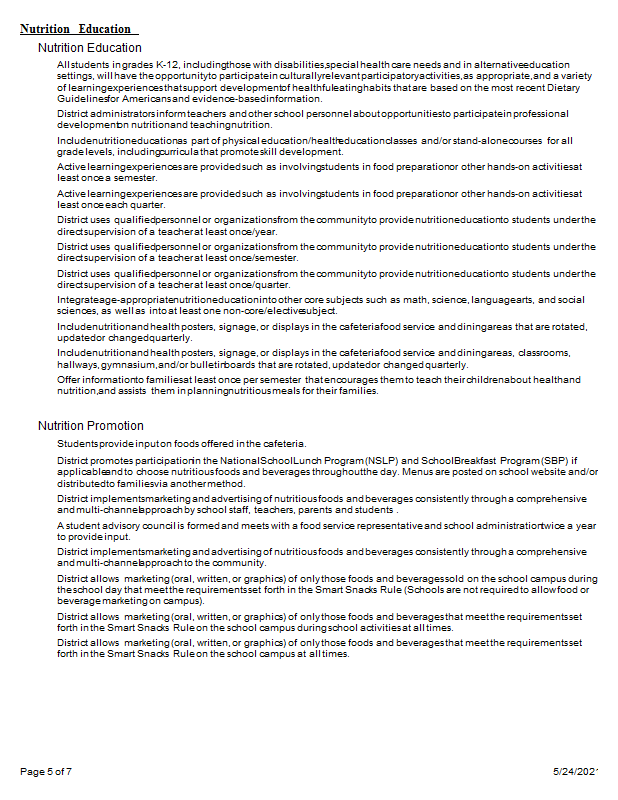
t healthy eating by students, USD #261 will provide nutrition education and engage in
h grade level as part of a sequential, comprehensive, standards-based program designed to provide students
jects such as math, science, language arts,
opriate, culturally-relevant, participatory activities, such as contests, promotions,
t-free dairy products, healthy food preparation
d energy expenditure (physical activity/exercise)
tegrating Physical Activity in the Classroom Setting
aily physical activity (i.e. at least 60 minutes per day) and for students
SD #261:
sical education through the classroom health education program by reinforcing the knowledge and self-
een lessons or classes, as appropriate
ommunication with Parents:
USD #261 will support parents’ efforts to provide a healthy lifestyle for their children. Through a
alth
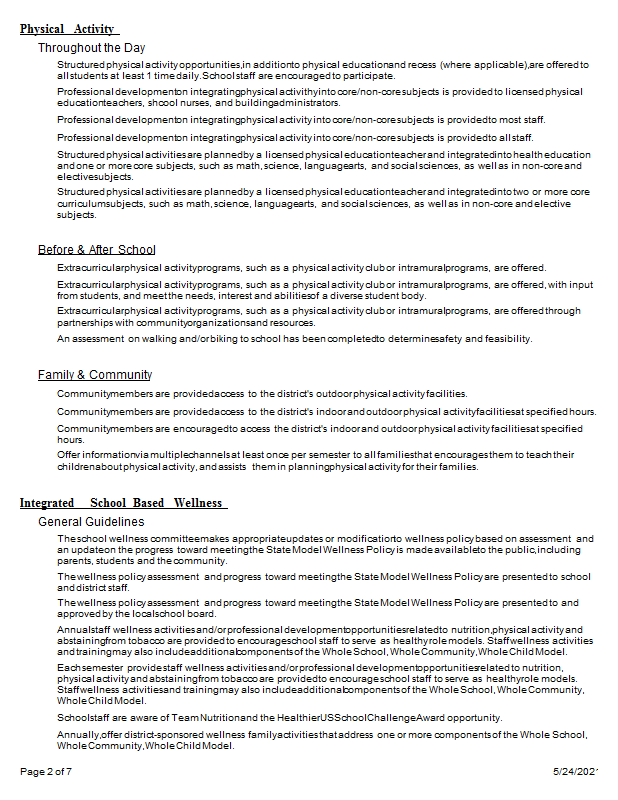
taff Wellness:
USD 261 highly values the health and well-being of every staff member and will work to implement activities and
N
In its efforts to teach, encourage, and suppor
nutrition promotion that:
Is offered at eac
with the knowledge and skills necessary to promote and protect their health
Is part of not only health education classes, but also classroom instruction in sub
social sciences, and elective subjects
Includes enjoyable, developmentally-appr
taste-testing, farm visits, and other activities promoting a healthy lifestyle
Promotes fruits, vegetables, whole grain products, low-fat (2%) and 1% fa
methods, and health-enhancing nutrition practices
Emphasizes caloric balance between food intake an
Links with school meal programs, other school foods, and nutrition-related community services
Includes training opportunities for teachers and other staff.
In
For students to receive the nationally-recommended amount of d
to fully embrace regular physical activity as a personal behavior, students need opportunities for physical activity beyond physical
education class.
Toward that end U
Will complement phy
management skills needed to maintain a physically-active lifestyle and to reduce time spent on sedentary activities, such as
watching television and playing video-games
Will provide short physical activity breaks betw
C
variety of means, USD #261 will provide information to help parents understand how and why USD 261 is working to impact the he
of their child(ren). A copy of the district’s policy and the food and beverages that meet the district’s standards will be made available to
parents.
S
policies that support personal efforts by staff to maintain a healthy lifestyle.

11/2/2006
Page 7 of 7
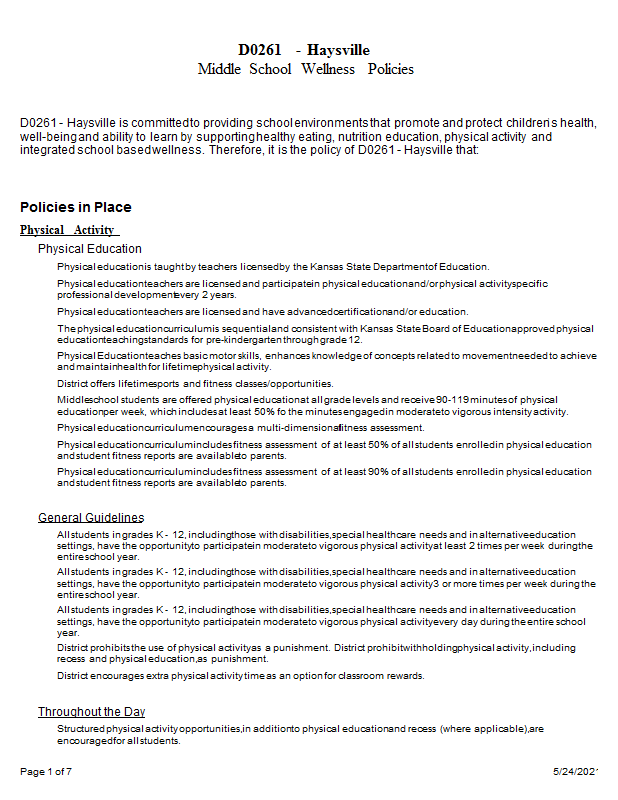
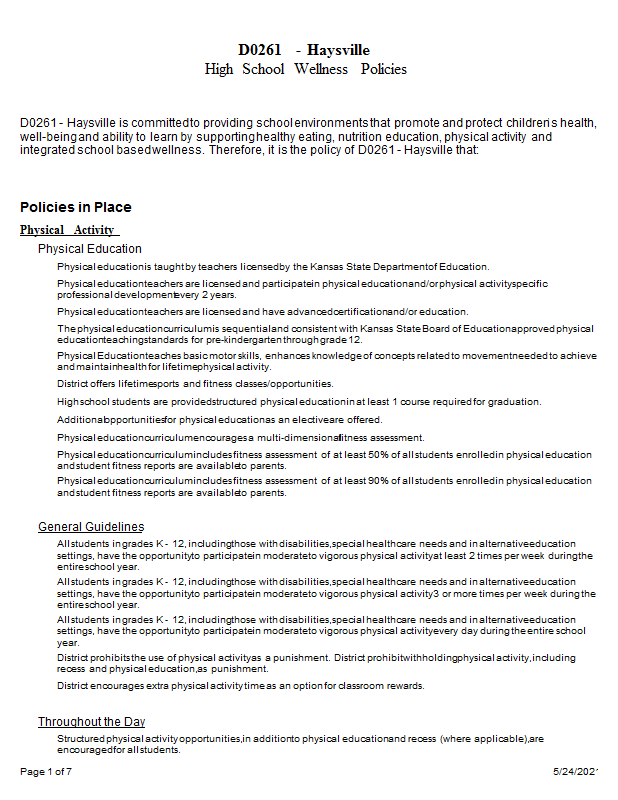
hysical Activity Opportunities and Physical Education:
ill have opportunities, support and encouragement to be physically active
00 minutes of physical education per week.
ical activity at least 15 minutes per day
e elementary schools and at the middle school level if logistically practical
In additio
g physical activity into the daily program be explored at
hysical Activity and Punishment:
In USD #261, physical activity will not be used (e.g. laps, pushups) or withheld (e.g. recess,
se of School Facilities Outside of School Hours:
USD #261 will work closely with the Haysville Recreation Commission to
e of
onitoring and Policy Review
Monitoring:
The superintendent of USD #261 or designee will ensure compliance with established district-wide nutrition and physical
chool food service staff, at the school level, will ensure compliance with nutrition policies and will report on this matter to the
or other
olicy Review:
These guidelines will be reviewed and updated on a yearly basis until the ‘basic’ (or above) goals have been met for
y
P
Physical Education (P.E.) K-12: All students in grades K-12 w
on a regular basis. To meet basic requirements:
Students will receive a minimum of 1
During physical education classes, students engage in moderate to vigorous phys
and/or 75 minutes per week.
Recess will occur before lunch at th
Physical education is available as an elective for grades 9-12
n, the committee recommends that additional avenues for incorporatin
all levels.
P
physical education) as punishment. (This guideline does not apply to extracurricular sports teams.)
U
determine the best use of the school facilities outside regular school hours to promote a healthy and physically fit lifestyle. All us
the facilities must be approved by the building administrator and must follow the local Board of Education guidelines. Special care
must be given to insure that no activities are unsupervised at anytime.
M
activity wellness policies. In each school, the building principal or designee will ensure compliance with these policies in their school
and will report on the school’s compliance to the superintendent of schools or designee.
S
superintendent or designee. This includes reporting on all inspections, changes in guidelines from the Federal Food Program,
pertinent information regarding the nutrition program. The food service director shall have a list of all nutritional values of the food that
is prepared and served upon request.
P
nutrition, nutrition education and physical activity. Once the plan is fully in place and operational, an assessment will be repeated ever
three years to ensure compliance, assess progress and determine areas in need of improvement. Policies will be revised as necessary
with plans set forth to facilitate implementation of any new policies or activities.

Back to top